A Big Statement Needs More Than Big Letters
Large-scale word art becomes part of the place around it. It can be seen across a courtyard, reshape the identity of an entrance, or turn a long architectural surface into a memorable encounter with language. That visibility also exposes every weak decision: an unclear phrase, an awkward viewing angle, a finish that does not suit its setting, or a delivery plan that never considered the doorway. A convincing commission brings the artistic intention and the practical project into the same conversation early. For venue teams, designers, community organizations, and businesses, the useful question is how to develop a statement whose wording, scale, physical form, and continuing use justify the attention it asks people to give.
A: Its message, audience, encounter, intended outcome, conditions, and responsibilities.
A: Its silhouette, reading experience, and physical details become important at different ranges.
A: It can change layout, component sizes, supports, assembly, and delivery requirements.
A: Questions about recognition, proportion, material appearance, and the actual site encounter.
A: No. Structure, joins, coatings, bases, fixing, and site conditions also belong to the system.
A: Qualified people responsible for reviewing and approving the specific installation.
A: Access restrictions can affect component size, division, and assembly before production begins.
A: The same brief, defined inclusions, clear exclusions, and identified responsibilities.
A: Approved wording, drawings, finishes, dimensions, alignment, installation records, and care information.
A: No. Assess the specific reading, practical, and interpretive outcomes intended for the project.
Define the Kind of Statement the Project Will Make
Begin with a clear description of the intended contribution. A place name that establishes identity is different from a public question that invites reflection or a temporary phrase that accompanies an event. Specify who should encounter the work and what they should recognize, consider, or remember. Avoid describing the aim only as impact, because impact can mean visibility, emotional response, publicity, or useful orientation. These outcomes require different evidence. A concise project brief should connect the message with its setting and audience before discussing the preferred height of the letters. That connection becomes the basis for reviewing the design as it develops.
Examine the Site From More Than One Distance
A large installation needs a sequence of views. From a distance, people may recognize its silhouette before they can read the words. At a middle range, the phrase should become clear in relation to the building or landscape. Close up, visitors encounter surfaces, joins, edges, bases, and the space around the object. Record these views with photographs and site measurements. Include the approaches used most often and any alternative entrance that changes the reading order. The installation should not depend entirely on the single angle selected for a polished rendering or the final publicity photograph.
Consider the background as part of the legibility study. A complex façade, moving foliage, bright glazing, or nearby temporary signage can compete with the letters. Lighting also changes which surfaces appear dark, reflective, or strongly shadowed. Check the location at relevant times of day and ask the site team about ordinary evening conditions. A finish sample and a proportional site mockup can reveal problems that a neutral digital background hides. The objective is to understand how the message emerges from this setting. Increasing the size may help one viewing distance while making the close encounter less coherent or the footprint harder to accommodate.
Finalize Language Before Fabrication Locks the Layout
Large scale makes wording errors expensive and highly visible. Decide the exact phrase, spelling, punctuation, accents, and capitalization before approving the production layout. Confirm any names with the responsible people and review translations with fluent readers who understand the intended context. If the text comes from an artist, writer, community participant, or another identifiable source, establish the appropriate approval for its use. Keep the final agreed version in one controlled record. A late change that seems small on a page can alter the overall width, line breaks, components, supports, and delivery arrangement of a physical installation.
Review how the wording functions without a spoken introduction. A phrase that works during a presentation may seem obscure to someone who meets it alone in the courtyard. Decide whether an explanation or attribution should accompany the work and where that information belongs. It should support the encounter without becoming an obstacle to reading the installation itself. For an identity piece, clarity may be the leading requirement. For an independent artwork, ambiguity might be part of the intention. Make that distinction explicit so practical reviewers do not accidentally remove the very quality the commission is meant to explore.
Invite the right people into the wording review while revisions remain manageable. A community project can need perspectives beyond the commissioning committee; a business installation can need both brand approval and feedback from the people who use the site. Keep artistic review distinct from operational review, then reconcile their findings in the final proposal. Neither a popular phrase nor an impressive visual treatment automatically resolves concerns about context. Document the reason the chosen message fits the place. That record helps later decision-makers understand the installation when personnel change or the surrounding site develops in a new direction.
Develop Scale Through Prototypes and Site Studies
A scale study should show the actual text, its full depth or supporting format, and the surrounding space it will occupy. Begin with a proportional site image or model, then use an appropriate full-size test of selected elements where practical. Compare letter width, spacing, and apparent height from the intended viewing distances. Include a person or another reliable scale reference in the design study, but do not let a flattering camera angle disguise the physical footprint. The prototype is a tool for resolving decisions, not merely a smaller object to admire. Record what it reveals about recognition, composition, surface detail, and the approach to the finished work.
Choose the Complete Fabrication System
The material visible on the front of a letter is only one part of its construction. A large piece may depend on internal structure, joining methods, coatings, mounting plates, bases, and the receiving site. Ask the fabricator to explain the complete proposed system in relation to the commission’s use. Exposure, expected contact, cleaning, appearance, transport, and maintenance all belong in this discussion. Compare alternatives through those requirements rather than treating a material name as a guarantee of suitability. A system appropriate for a short indoor event may be a poor choice for a long-term outdoor location, even when their initial appearance is similar.
Discuss finish quality through samples and defined expectations. Color, sheen, texture, and the appearance of edges can become more noticeable when the work is large or viewed closely. Decide which areas will be inspected at close range and how joints or panel transitions should read. Ask how approved samples relate to the final production process, because a small hand-finished sample may not show every characteristic of a much larger component. Include the site lighting in the comparison where possible. An informed approval connects the desired aesthetic with what the chosen system can actually deliver and how it will be cared for afterward.
Bring Installation Expertise Into the Design Conversation
The support and installation strategy should be developed with qualified people responsible for the actual project. Provide them with the proposed form, dimensions, location, exposure, and expected interaction instead of asking for a generic fixing suggestion. They may need information about the supporting surface, access, existing conditions, or site-specific approvals before a method can be agreed. Keep their review connected with the design schedule so a practical requirement does not arrive after fabrication is complete. This is a coordination step, not a reason to invent a universal engineering recipe. The final method must suit the actual installation and the responsibilities of the people approving it.
Plan the Journey From Workshop to Final Position
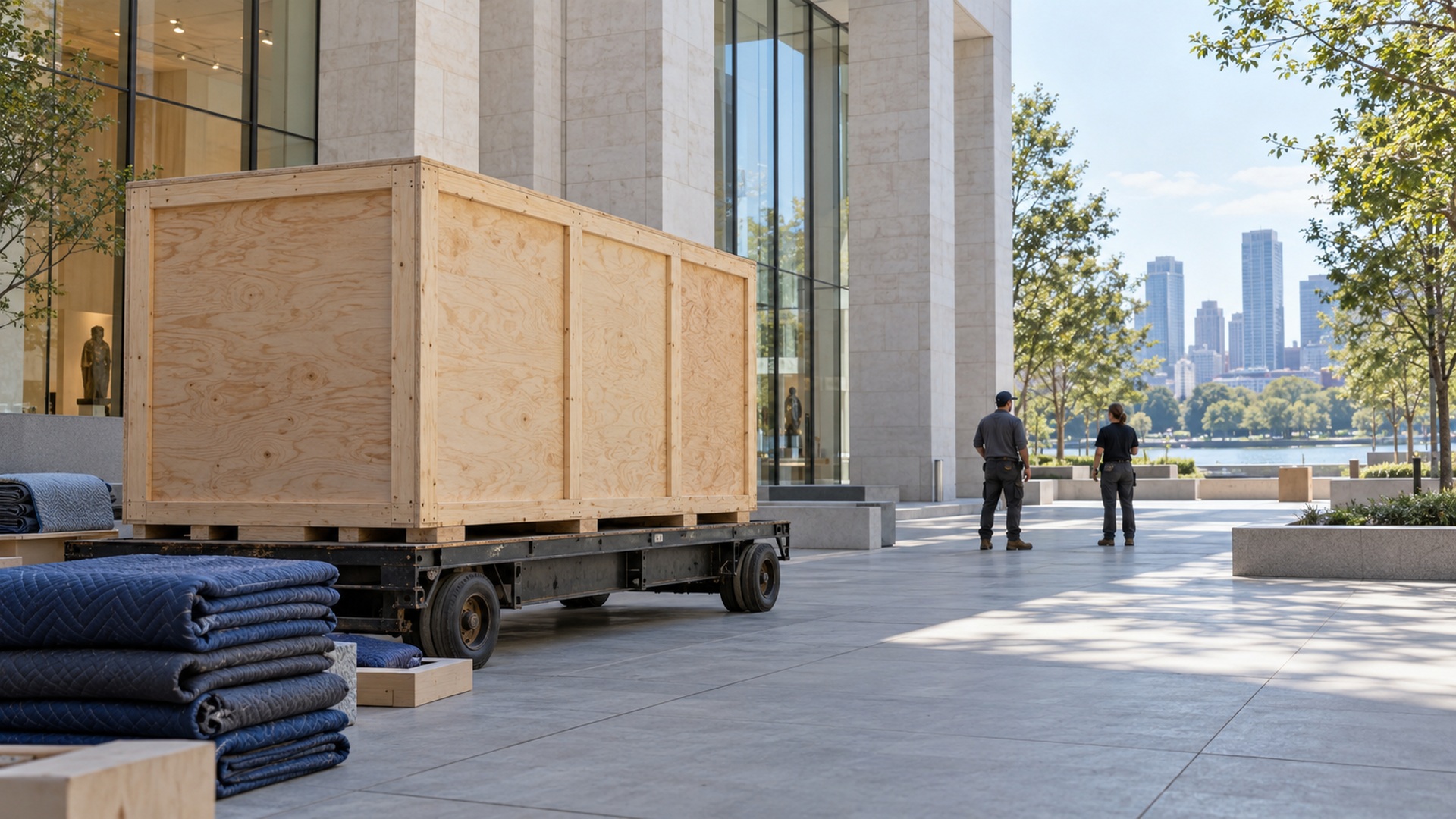
Transport begins with the dimensions and handling needs of the finished components. A piece that fits comfortably in the workshop can still be difficult to move through a narrow entrance, around a corner, or across a busy site. Record the route from unloading to final placement and identify restrictions that affect component size or assembly. Ask who will arrange packaging, transport, lifting or handling equipment, site access, and temporary protection. Keep those responsibilities visible in the quote and project schedule. Delivery should be considered while the design can still adapt to the route, rather than left as a problem to solve on arrival.
Assembly choices can influence both logistics and appearance. Dividing a word into components may simplify transport but introduce joints that need a deliberate visual treatment. A large base may help establish a unified composition while creating another item to move and position. Discuss these tradeoffs with the design and fabrication team using the actual site constraints. Review how the assembly will be checked before dispatch and what can be completed only at the location. A workshop trial can reveal fit or alignment issues earlier than a first assembly during a narrow installation window. Agree what evidence will confirm the production is ready to leave the workshop.
The venue’s ordinary activity also affects installation. A public entrance, a working office, and an event space each have different access windows and coordination needs. Ask the responsible site team to define the arrangements they can support. Include protection of surrounding finishes, communication with other contractors, and the sequence for returning the area to ordinary use. Avoid assuming the delivery crew will resolve every site issue as part of placing the object. A shared plan should explain who is doing what, when the work can take place, and which conditions must be ready before the installation team arrives.
Make the Quote and Approval Process Reviewable
Ask for a scope that distinguishes design development, samples, fabrication, finishing, packaging, transport, installation, and any later service. A single attractive price can conceal assumptions about responsibilities. Compare proposals against the same brief and identify exclusions or unresolved site information. Decide which decisions require a new approval and how changes will affect cost and schedule. Keep approved drawings and text proofs identifiable by version. These ordinary project controls protect the creative intention by reducing the chance that an outdated phrase, dimension, or finish enters production after the design team believes the decision has been settled.
Set acceptance criteria that can actually be checked. They might include the approved wording, component dimensions, agreed finish sample, alignment, documented installation method, and the care information delivered with the work. Avoid relying only on a general instruction that the piece should look impressive. Identify who will inspect the fabrication and who will accept the completed installation at the site. Where the commission involves several organizations, confirm which person can resolve a disputed detail. A clear review process makes it easier to address an actual discrepancy without reopening unrelated artistic choices or assuming every preference is part of the agreed scope.
Prepare for the Installation's Life After Launch
Assign responsibility for routine observation, cleaning, repair, and any review of the message itself. Request the records needed to maintain the complete system, including finishes and replaceable components. A temporary project needs a removal and storage plan, while a long-term work needs a practical route for reporting damage or changing site conditions. Discuss whether individual elements can be replaced without reconstructing the whole installation. Keep the approved artwork and production records accessible to the people who will inherit the project. A large statement can remain valuable only if its appearance and practical use continue to receive attention after the launch event is over.
Assess the Statement Against Its Original Purpose
After installation, observe the work from the views used in the design study and during ordinary use of the site. Can the intended audience recognize the wording at the expected point of approach? Does the close encounter support the material quality and meaning that were promised? Are practical paths and essential information still clear around the installation? Record specific observations rather than assuming that photographs or social-media attention demonstrate every intended outcome. Publicity may be one objective, but it is different from recognition, reflection, or a stronger connection with the place. Evaluate the result using the purpose established at the beginning.
A successful large-scale word art commission feels substantial because its decisions agree with one another. The language fits the place, the proportions fit the encounter, the fabrication fits the conditions, and the delivery and care fit the people responsible for it. Size can amplify that coherence, but it cannot replace it. Develop the project through a clear brief, realistic site studies, approved wording, considered samples, and coordinated installation planning. The finished statement then has a foundation for lasting relevance, rather than depending solely on the surprise of seeing a very large phrase for the first time.