From a spoken idea to a built landmark
A request for a massive word sculpture often starts with something deceptively small: a name, a slogan, or a handful of initials. Turning that language into a convincing physical installation requires decisions about geometry, materials, surface quality, support, and the route from the shop to the site. WhiteClouds publicly describes a fabrication practice that combines digital methods with conventional making and finishing, rather than relying on one machine or one material for every project. Understanding that approach helps a commissioning team ask better questions and recognize what must be settled before production. This explainer follows the main decisions involved in developing a large word display, using the company’s published capabilities as a reference. It does not present an undocumented tour of its internal operations. Where the exact method depends on a particular commission, the useful focus is what the client and fabrication team need to resolve together.
A: WhiteClouds says early concepts and references can begin a project discussion; required files depend on the commission.
A: Its published capabilities span multiple fabrication methods, selected around the project.
A: Visible surfaces, supporting parts, lighting, and fine details can have different requirements.
A: A surface treatment can create that appearance, but the underlying construction remains a separate specification.
A: It should clarify the agreed geometry, dimensions, visible finish, support arrangement, and other approval decisions.
A: No. A particular commission needs its own documented materials, support, finish, and installation scope.
A: Bring up doorways, loading routes, and assembly space before the construction approach is finalized.
A: Clarify them explicitly, including receiving, lifting, anchoring, electrical work, and final placement.
A: Use a designated approval contact to consolidate comments into a clear revision record.
A: The coordinated fit between geometry, materials, construction, finish, handling, and the audience's setting.
The initial brief establishes the working constraints
According to its published project overview, WhiteClouds can review a concept before a client has polished production files. That is an important distinction for organizations that know the desired message but have not decided how to build it. Early conversations can begin with approximate dimensions, references, intended use, destination, and deadline. The first goal is to give the team enough context to evaluate the commission, rather than to pretend every structural and visual detail is already solved.
A useful brief distinguishes facts from preferences. The width of an available plaza, the opening date of an exhibition, and the size of a receiving doorway may be fixed; a particular surface texture or lighting effect may be negotiable. Separating those constraints allows alternatives to be compared fairly. If the desired word will not fit at the requested height, the team can revisit spacing, stacking, placement, or character proportions. That discussion is more productive when everyone understands which choices serve the message and which conditions cannot change.
The audience’s behavior belongs in the brief as well. A sculpture behind a stage and a sculpture placed where families gather for photographs will experience different demands. Close contact, repeated handling, public access, outdoor exposure, and movement between venues all influence the eventual construction. Describe the expected behavior without assuming that a large object is automatically suitable for climbing or seating. Those uses require deliberate design decisions and an agreed installation scope. The commissioning team should also identify who will operate and maintain the display after delivery.
Digital design turns lettering into physical geometry
Before material is cut, the shape must be interpreted as an object with depth and connections. Typeface artwork can establish the visible outline, but a fabrication design also needs to account for returns, cavities, seams, supports, and assembly relationships. A narrow stroke may be visually elegant yet difficult to strengthen without changing its appearance. The team should communicate any necessary adaptations through drawings or a proof that the client can understand. A good approval review therefore considers the full word, its relationship to the site, and the details most likely to change during construction. It should not be reduced to agreeing that a flat logo has been enlarged.
Fabrication methods follow the display's job
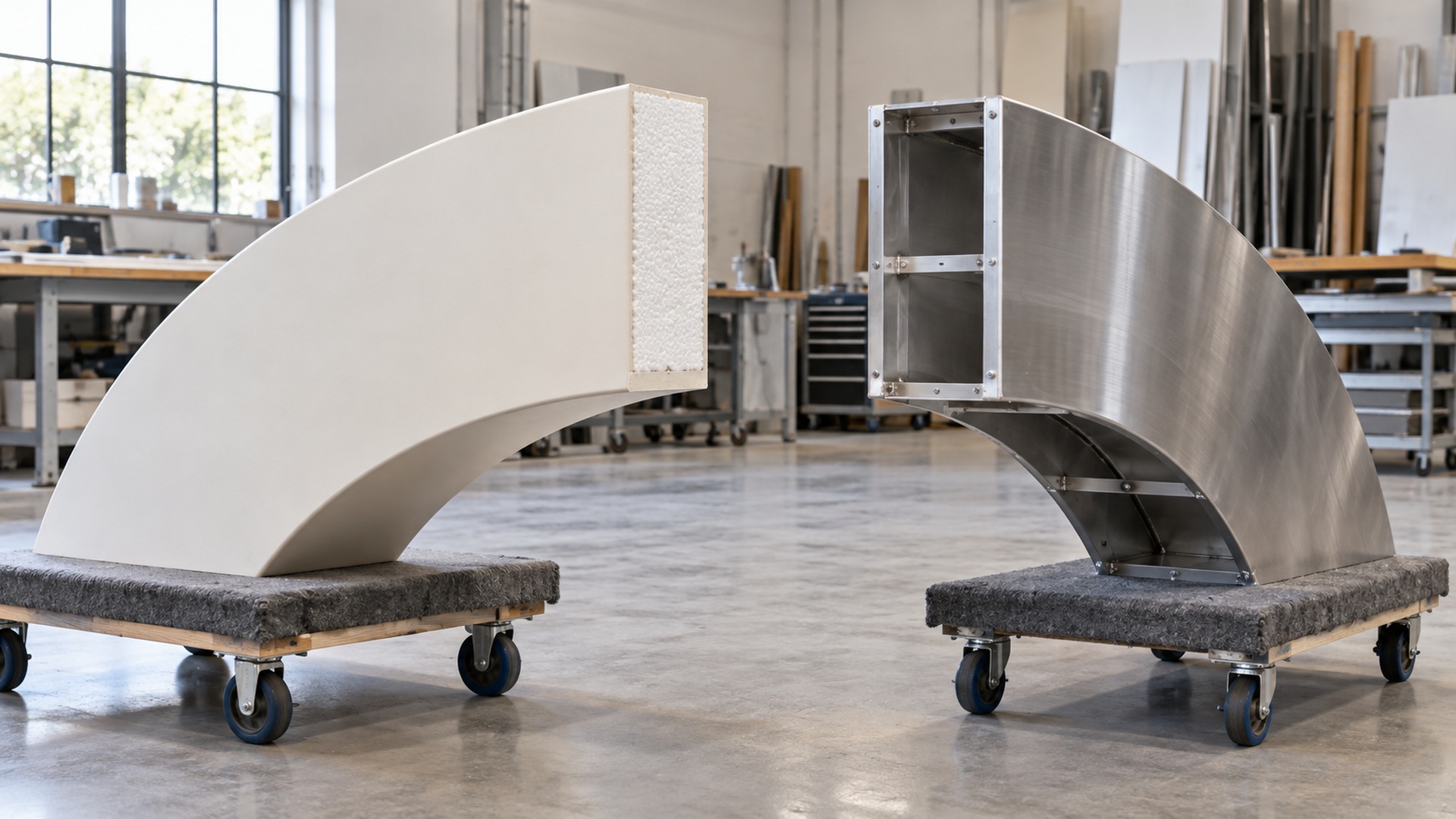
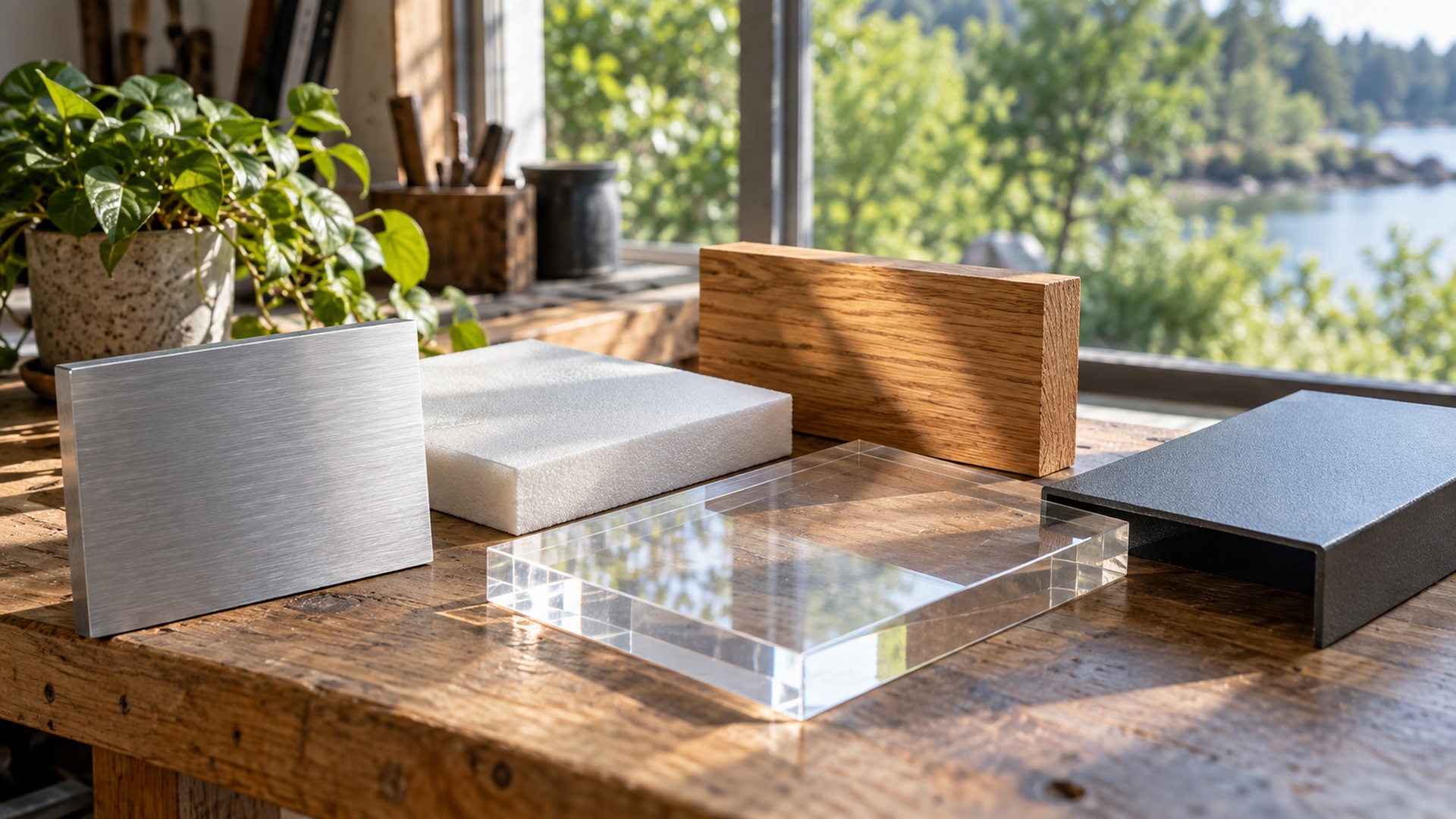
WhiteClouds’ large-letter service page identifies several methods and materials that may be combined in a commission, including foam cutting or carving, metal fabrication, woodworking, acrylic components, and selected printed details. The range matters because different parts of a sculpture can have different jobs. A visible shell may establish the form while a separate framework carries loads or connects the object to its base. A decorative component may need fine detail without requiring the same production method as the largest body sections.
For the client, the relevant question is why a proposed method fits the commission. Is it chosen to reduce handling weight, produce a particular curve, accommodate illumination, or support repeated installation? Ask the team to explain the tradeoff in terms of the finished display rather than simply naming equipment. Digital fabrication can repeat a geometry accurately, but it does not remove the need for appropriate materials, joining, finishing, and installation. A production proposal becomes easier to assess when each process is connected to a visible outcome or a practical requirement.
A published foam-letter project shows the fabrication detail
WhiteClouds’ Cisco Imagine case study describes two seven-letter sets with different geometric treatments, each more than seven feet tall and thirty-six inches deep. The account distinguishes the construction challenges: an m required hundreds of pieces, while an e needed internal support. This is a documented example of geometry affecting assembly, rather than a claim that every word is enlarged and cut in one operation.
The same account describes polyurea coating before primer and paint, customer-supplied Pantone colours, and difficult masking around numerous components. It reports a project duration of about three months. Those details belong to this commission, rather than establishing a universal lead time or finish specification. The example makes the stages visible: designed geometry, assembled form, protective treatment, and colour finishing.
For your own project, connect each proposed production stage with a requirement. A tall face seen across a hall may need a different finish review from a lobby object viewed closely. Ask which surfaces are exposed, where sections join, and which component provides support. Use a physical detail or sample to resolve the particular uncertainty. The process becomes understandable when its steps answer the display’s needs, rather than when a quotation lists equipment without explaining its role.
Metal installations introduce a different set of decisions
WhiteClouds describes metal letter displays for applications that include campus and outdoor landmarks. Permanent placement changes the conversation from simple presentation to ongoing exposure, support, and service access. The project team needs to understand the visible construction and the connection to the site as parts of one installation. A polished concept image alone does not show how a base will meet the ground or how the final position will be established. Those relationships should be coordinated before the work is shipped.
Different metal assemblies can also have different weights and surface behaviors. Ask which alloy, finish system, and joining approach are proposed and why they suit the setting. Consider the actual exposure, nearby materials, public contact, and the maintenance resources available at the site. Avoid deciding that all metal construction is maintenance-free or that a heavier object is automatically stable. The installation design must address the particular shape and location. Where a site requires specialized engineering or installation expertise, the responsibilities should be made explicit between the commissioning organization, fabricator, and local team.
Color, light, and detail bring the word into focus
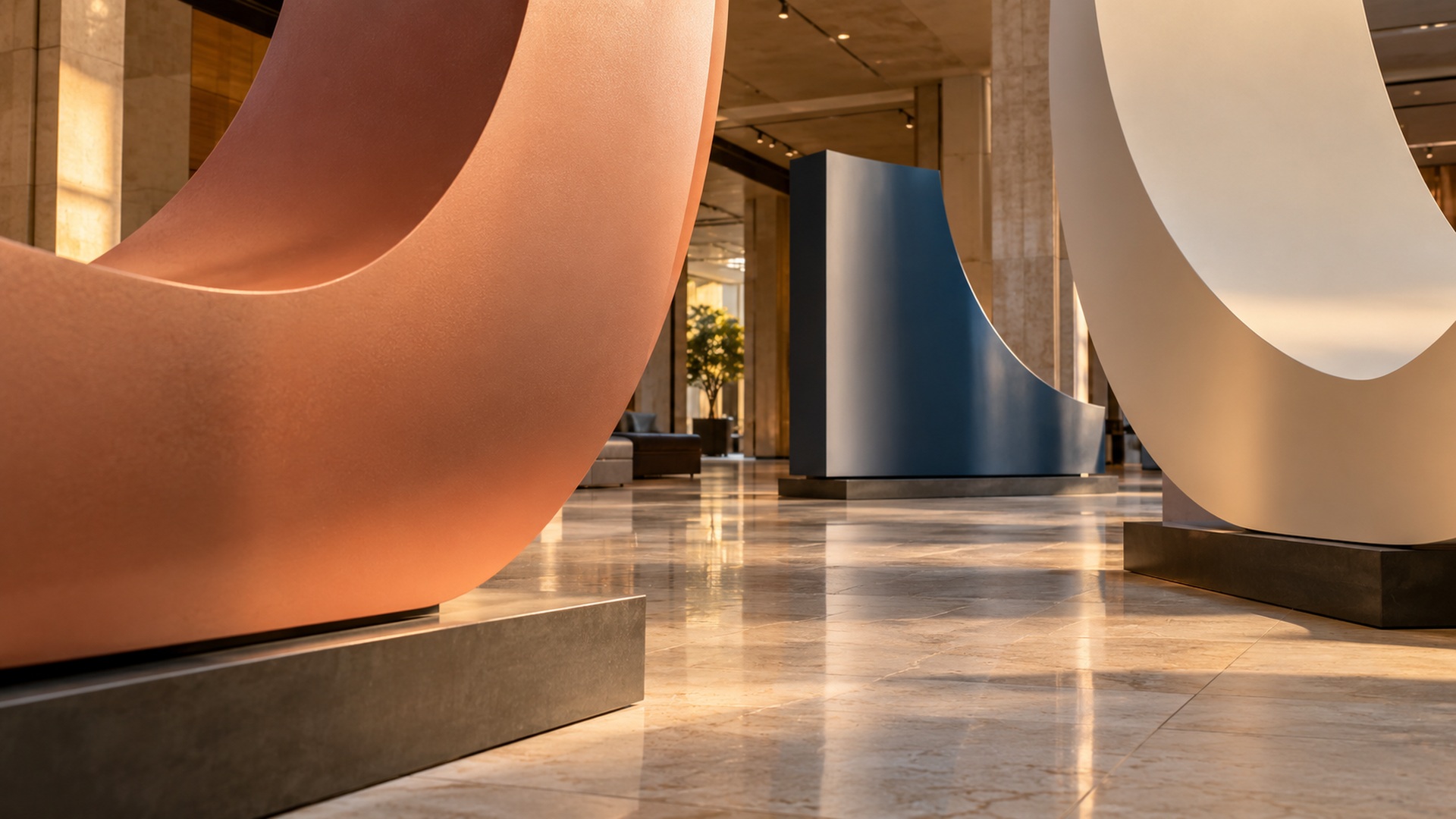
Once the form and construction direction are resolved, surface and illumination choices determine how the audience perceives the sculpture. A satin finish may reveal depth without strong reflected glare; a glossy treatment may create a dramatic effect but complicate photography. Concealed light can separate a word from its surroundings, while frontal illumination can support straightforward reading. These are design choices to test in context, not interchangeable upgrades to add at the end. Physical finish samples and representative lighting tests help the client make informed decisions. Include side surfaces, seams, cable paths, and access points in the review so the final appearance remains convincing beyond the front view.
Transport and assembly are designed into the commission
The largest visible dimension can become a shipping and access constraint long before it becomes a design advantage. A sculpture may need to divide into components to suit a freight route, loading dock, doorway, or installation area. Discuss where those divisions occur and how the sections reconnect. A seam hidden from the primary view might be obvious from another approach, so its visual treatment should be reviewed with the layout. The receiving team also needs to understand the sequence rather than encountering an unfamiliar assembly task on opening morning.
WhiteClouds’ public overview describes packing and delivery planning as part of its project support. For an individual commission, clarify the actual included scope: crating, freight, handling guidance, installer coordination, or site assembly may involve different responsibilities. Obtain the dimensions and weights needed by the receiving crew and confirm any equipment requirements with that crew. Identify where the shipment can be safely unpacked and which packaging should be retained. A recurring-event display benefits from a packing system that supports the next installation as well as the initial delivery.
Preparation at the destination can be just as important as fabrication. The final area may need to be ready before the shipment arrives, and other construction activity may expose the finished sculpture to dust or damage. Establish who checks the site, who approves the installed position, and how discrepancies are resolved. The client should retain the approved drawings and setup instructions where they are accessible to the people doing the work. A carefully built word loses its intended effect if it is placed inaccurately, partially obstructed, or lit differently from the approved arrangement.
Check the geometry from more than the front
A word sculpture has surfaces a flat identity file cannot describe. Consider a hypothetical character with a deep circular opening: the front can read clearly while the inside surface collects shadow, and the return may reveal a join from the side. A diagonal leg may also meet its support differently from a vertical stem. Review those relationships on the three-dimensional proof and on the representative detail agreed for the commission. Distinguish a drawing that establishes geometry from a sample that establishes finish; neither substitutes for the other. Ask the fabrication contact to identify which visible detail changes when the proposed assembly is divided for transport. This review gives the client a concrete question to answer, rather than another general invitation to approve an attractive rendering. It also keeps the audience’s approach directions connected to the object that will actually arrive.
Review the finished word at the transitions between stages
Use the documented scope to review the sculpture as it moves from design toward delivery. A geometry proof should settle the word, dimensions, and visible adaptations. A representative finished detail should answer the important colour, texture, and seam questions. Packing and setup records should explain how the approved form reaches its final position. These are different decisions, so a favourable response to a concept image cannot stand in for all of them. Consolidate comments at each agreed stage and identify any unresolved issue before it affects later work.
At delivery, compare the assembled word with the approved arrangement from the audience’s actual approach. Check that joins, side surfaces, supports, and lighting behave as intended in that setting. A component that looked correct in isolation may have a different effect when placed beside another letter or against the final background. Give the receiving team the information needed to reproduce the agreed arrangement and identify the contact responsible for discrepancies. The published project example shows how several operations contribute to one completed form. Your commission needs its own explanation of those operations and their result, with the design and fabrication decisions connected to the display’s intended use. A complete handover should also identify how the finished surfaces are cleaned and which parts the owner may service, so everyday care follows the actual supplied construction.