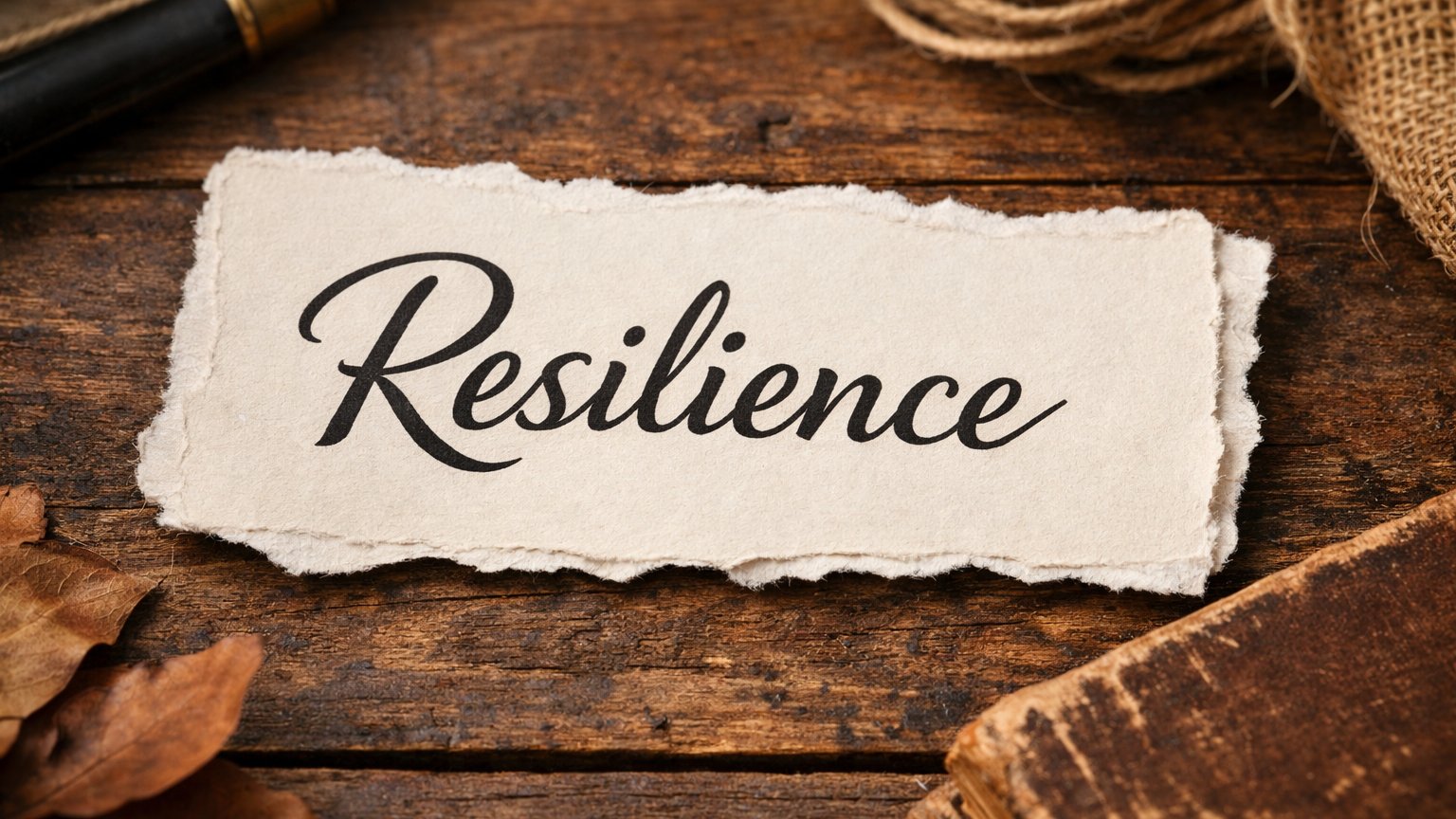
In an era defined by rapid change, global uncertainty, digital overload, and personal reinvention, one word rises above the noise with quiet strength: resilience. It is a word we hear in boardrooms, classrooms, therapy sessions, sports arenas, and community centers. It appears in leadership books, mental health guides, economic forecasts, and climate discussions. Yet despite its popularity, resilience is often misunderstood, oversimplified, or reduced to a motivational slogan. Today’s Word of the Day, resilience, is far more than a buzzword. It is a skill, a mindset, a biological process, a social force, and a defining trait of progress. In a world where disruption has become routine, resilience matters more than ever.
A: Not quite—toughness is taking hits; resilience is recovering and adapting after them.
A: Yes—routines, skills, support, and perspective-building can strengthen it over time.
A: Rapid change and uncertainty make “reset + adapt” a daily life skill, not a rare event.
A: Attach it to a concrete behavior: “resilience looked like rebuilding a schedule and reaching out.”
A: No—using support wisely is often a hallmark of resilience.
A: Grit is long-term persistence; resilience is recovery plus adaptation when things go sideways.
A: It can be strained—rest, connection, and small wins help rebuild your capacity.
A: Strong relationships, shared resources, clear communication, and local problem-solving networks.
A: Most say re-SIL-i-ence, with the stress on “SIL.”
A: A small reset: sleep, a walk, a check-in, or a next-step list you can finish today.
What Does Resilience Really Mean?
At its core, resilience is the ability to adapt, recover, and grow stronger in the face of adversity. The term originates from the Latin word resilire, meaning “to rebound” or “to spring back.” But modern psychology, neuroscience, and leadership studies have expanded its meaning far beyond simply bouncing back.
Resilience is not about ignoring hardship or suppressing emotion. It is not about pretending everything is fine. True resilience acknowledges stress, loss, failure, and uncertainty. It allows space for difficulty while maintaining forward movement.
Psychologists define resilience as the process of adapting well in the face of trauma, tragedy, threats, or significant stress. This includes personal challenges such as job loss, health issues, relationship struggles, or financial hardship. It also includes collective challenges like economic downturns, natural disasters, and global crises.
Resilience does not eliminate stress. Instead, it equips individuals and communities to navigate it effectively.
Why Resilience Matters More Than Ever
The 21st century has delivered unprecedented transformation. Technological innovation reshapes industries overnight. Remote work redefines professional life. Social media alters communication. Artificial intelligence disrupts entire career paths. Climate concerns intensify. Economic volatility persists. Global events unfold in real time across digital platforms.
The pace of change can feel overwhelming.
In such an environment, technical skills alone are not enough. Intelligence, talent, and ambition matter, but adaptability often determines long-term success. Resilience becomes the bridge between disruption and opportunity.
Professionally, resilient individuals recover from setbacks faster. They pivot when plans collapse. They see feedback as information rather than personal attack. They treat failure as data.
Emotionally, resilience protects mental health. It supports coping mechanisms during uncertainty. It reduces the likelihood of chronic stress spirals.
Socially, resilience strengthens communities. Neighborhoods rebuild after disasters. Organizations reinvent after crises. Families adapt to life transitions.
The modern world does not promise stability. Resilience provides stability within change.
The Science Behind Resilience
Resilience is not simply motivational rhetoric; it has measurable biological and psychological foundations.
When we encounter stress, the brain activates the fight-or-flight response. The amygdala signals threat, cortisol levels rise, and the body prepares for action. In short bursts, this system is protective. However, chronic stress can damage physical and mental health.
Resilience involves regulating this stress response. The prefrontal cortex, responsible for rational thinking and emotional control, plays a key role. Individuals who develop strong emotional regulation skills can calm the amygdala’s alarm more quickly. This reduces prolonged stress exposure.
Research also shows that resilience is linked to social connection. Human beings are wired for community. Supportive relationships buffer stress and enhance recovery. This is why isolation can magnify adversity, while belonging can ease it.
Importantly, resilience is not fixed at birth. Genetics may influence temperament, but resilience can be learned and strengthened over time. Neural pathways adapt. Habits reshape responses. Perspective transforms perception.
Resilience is trainable.
Resilience Is Not Toxic Positivity
One of the most critical distinctions in modern discussions is separating resilience from toxic positivity.
Toxic positivity insists that people must stay upbeat at all times. It dismisses negative emotions and frames suffering as weakness. Resilience, in contrast, validates difficulty. It allows grief, frustration, anger, and fear. It does not rush healing.
True resilience says: “This is hard. And I will find a way forward.”
The difference matters.
Suppressing emotion can lead to burnout and psychological strain. A resilient approach encourages processing emotion constructively. Journaling, therapy, honest conversation, reflection, and mindfulness all contribute to authentic resilience.
It is strength through acknowledgment, not denial.
Personal Resilience in Everyday Life
Resilience is not reserved for dramatic life events. It appears in daily routines. It shows up when someone applies for jobs after rejection. When a student studies again after failing an exam. When a parent navigates sleepless nights. When a small business owner reinvents strategy after slow sales.
In everyday life, resilience looks like consistency.
It is waking up and trying again. It is choosing growth over comfort. It is setting boundaries when overwhelmed. It is resting when needed. It is learning rather than quitting. Small acts of resilience compound over time. What feels like minor perseverance today becomes profound strength tomorrow.
Resilience in Leadership and Business
In the business world, resilience has become a core leadership trait. Organizations face market disruption, supply chain challenges, technological shifts, and consumer behavior changes.
Resilient leaders do not cling rigidly to outdated strategies. They assess reality quickly. They communicate transparently. They empower teams to adapt.
Companies that survive major downturns often share common characteristics: flexible planning, diversified revenue streams, strong internal culture, and the ability to innovate under pressure.
Corporate resilience is not about never experiencing loss. It is about strategic recovery and reinvention.
History shows that many of the world’s most influential companies emerged stronger after crises. They redesigned products, reimagined services, or pivoted business models.
Resilience turns volatility into evolution.
Resilience and Mental Health
Mental health conversations have become more open in recent years, and resilience sits at the center of this shift.
Anxiety, burnout, and depression are widespread concerns in modern society. While professional treatment and support are essential for many individuals, resilience-building practices can strengthen mental well-being.
Practices such as cognitive reframing, gratitude, goal setting, stress management, physical exercise, and sleep hygiene all contribute to resilience. They create protective buffers against chronic strain.
Resilience does not eliminate mental health struggles. However, it increases coping capacity and reduces the duration and intensity of setbacks.
It also removes stigma. When resilience is framed as a skill rather than an innate personality trait, it becomes accessible to everyone.
Resilience in Education and Youth Development
Educators increasingly recognize the importance of teaching resilience alongside academic content. Young people today navigate academic pressure, digital comparison culture, social complexity, and uncertain futures.
Resilient students develop problem-solving skills. They learn to handle feedback without internalizing failure. They view challenges as opportunities to grow.
Schools that integrate social-emotional learning programs often see improved academic outcomes and stronger classroom environments. When students feel capable of handling adversity, they are more willing to attempt difficult tasks.
Resilience in youth does not mean shielding children from all discomfort. It means guiding them through manageable challenges while offering support.
Adversity handled with guidance becomes training.
Community Resilience in a Changing World
Resilience extends beyond individuals. Entire communities demonstrate resilience during crises.
After natural disasters, neighborhoods rebuild infrastructure and social networks. During economic downturns, local businesses collaborate. In times of social tension, communities engage in dialogue and reform.
Community resilience relies on shared resources, trust, communication, and collective action. Strong social bonds accelerate recovery.
The concept of resilience is increasingly central to urban planning, climate policy, and public health. Cities now design infrastructure to withstand extreme weather. Governments invest in emergency preparedness. Organizations create contingency plans.
Resilience shifts focus from reaction to preparation.
How to Build Resilience
While resilience is complex, several foundational principles consistently appear across research.
First, cultivate self-awareness. Understanding emotional triggers and stress patterns allows proactive management.
Second, strengthen relationships. Social support is one of the most powerful resilience predictors.
Third, embrace adaptability. Rigidity increases stress. Flexibility reduces it.
Fourth, develop meaning. Individuals who connect adversity to purpose recover more effectively. Meaning transforms struggle into narrative.
Fifth, practice realistic optimism. This is not blind positivity. It is confidence that challenges can be navigated.
Resilience grows through repetition. Every challenge faced constructively strengthens the capacity for the next one.
The Role of Failure in Resilience
Failure is often portrayed as something to avoid. Yet failure is one of resilience’s greatest teachers.
When people fail, they confront limitation. They experience discomfort. They reassess strategy.
Without failure, resilience cannot develop.
Many successful innovators, athletes, entrepreneurs, and artists credit repeated failure as foundational to achievement. Each setback refines skill, strategy, and mindset.
Resilience reframes failure as feedback.
It does not romanticize defeat. It analyzes it. It extracts learning. It moves forward.
Resilience in the Digital Age
The digital era presents unique resilience challenges. Constant comparison, information overload, and online criticism can erode confidence and increase stress.
Social media often showcases curated success without visible struggle. This creates unrealistic benchmarks.
Digital resilience involves boundary-setting. It includes managing screen time, curating information intake, and disengaging from harmful online environments.
It also involves critical thinking. Not every headline requires emotional investment. Not every opinion requires response.
In a hyperconnected world, resilience includes knowing when to disconnect.
Why Resilience Is the Word We Need Now
Language shapes thought. The words we emphasize influence cultural priorities.
Resilience matters because it encourages preparation rather than panic. It emphasizes growth rather than fragility. It highlights agency rather than helplessness.
This does not mean denying hardship. It means recognizing capacity.
The global landscape continues to evolve. Economic systems shift. Careers transform. Social dynamics change. Technological innovation accelerates.
In such an environment, the most valuable resource may not be stability, because stability cannot be guaranteed. The most valuable resource is adaptability.
Resilience empowers individuals to navigate uncertainty with confidence. It strengthens organizations facing disruption. It supports communities rebuilding after crisis.
It is not flashy. It is not loud. But it is powerful.
Resilience as a Lifelong Practice
Resilience is not a destination. It is a continuous process.
There will always be new challenges. Health changes. Relationships evolve. Careers pivot. Unexpected events occur.
Resilience grows through experience. It deepens with reflection. It strengthens through community.
Each time someone chooses persistence over surrender, learning over stagnation, and courage over avoidance, resilience expands.
It is built quietly in daily decisions.
The Future Belongs to the Resilient
As we look ahead, one truth becomes increasingly clear: the future favors those who can adapt.
Skills may become obsolete. Industries may transform. Technologies may disrupt. But the capacity to adjust, recover, and grow remains timeless.
Resilience is not about surviving comfortably. It is about thriving despite complexity.
It is the word that bridges challenge and possibility.
It is the mindset that transforms crisis into innovation.
It is the quality that turns adversity into advancement.
Today’s Word of the Day is resilience. And it matters more than ever because it is the foundation upon which personal growth, professional success, and societal progress are built.
In a world that refuses to stand still, resilience is the strength that keeps us moving forward.