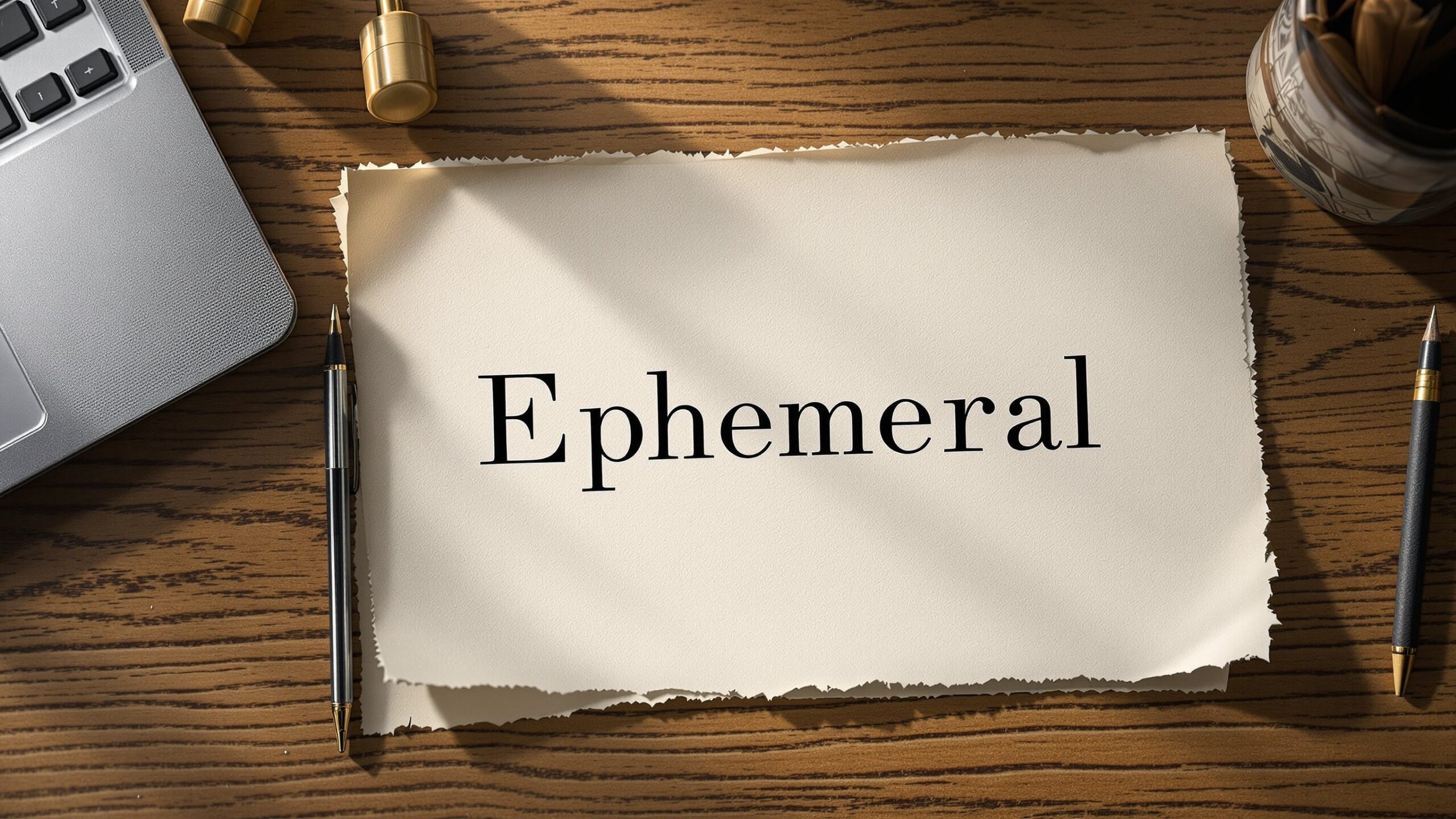
Some words feel like they were built for poetry. “Ephemeral” is one of them. Soft in sound yet powerful in meaning, the word captures something we all recognize but struggle to hold onto: moments that last only a short time. The term “ephemeral” describes anything brief, transient, or short-lived. A sunset that fades into dusk. Morning dew that vanishes with the first rays of sunlight. A childhood summer that seems endless—until it isn’t. In a world obsessed with permanence, productivity, and preservation, “ephemeral” gently reminds us that not everything is meant to last. Some things are beautiful precisely because they are temporary. Understanding this word isn’t just a vocabulary exercise. It is a lens through which we can see life more clearly.
A: Not at all—it can be bittersweet, but it often celebrates the beauty of brief things.
A: “Fleeting” is the closest everyday swap without changing the tone too much.
A: Yes—especially for things designed to be temporary, like pop-up art, paper keepsakes, or short-run trends.
A: It leans formal-poetic; it works in essays and storytelling, and in elevated everyday writing.
A: Pair it with a clear image: “ephemeral fog,” “ephemeral laughter,” “ephemeral glow.” Concrete nouns keep it grounded.
A: Using it for something merely “portable” or “optional”—it’s about duration, not convenience.
A: Related, but different: “ephemera” are short-lived items or keepsakes, while “ephemeral” describes short-lived things.
A: Anywhere time feels visible—sunsets, seasons, applause, first snow, last-day feelings, and sudden laughter.
A: Definitely—especially moods that pass quickly but leave a trace, like a spark of courage or a rush of awe.
A: “The most ephemeral things are often the ones we remember longest.”
The Origins of Ephemeral
The word “ephemeral” traces back to the Greek term ephemeros, meaning “lasting only a day.” It combines “epi,” meaning “upon” or “for,” and “hemera,” meaning “day.” The original sense was literal—something that endured for a single day. Over time, the meaning expanded to include anything that lasts a very short time, whether that span is hours, weeks, or even years when measured against the vast sweep of history.
Language evolves, but the essence of “ephemeral” remains anchored in brevity. It evokes the fragile quality of existence, the way time slips through our fingers, and the reality that every experience has an endpoint. That ancient root still whispers through the modern word, reminding us that even a single day can hold immeasurable beauty.
Why “Ephemeral” Matters More Than Ever
In the digital age, we attempt to document everything. Photos, videos, cloud storage, social media stories, and endless archives give us the illusion that we can freeze time. Ironically, much of our digital life is ephemeral as well. Posts disappear in 24 hours. Trends flare and vanish overnight. Viral fame flickers like a match in the wind. Yet beyond technology, our lives remain profoundly ephemeral. Seasons change. Relationships shift. Careers evolve. Children grow. The word matters because it invites awareness. It asks us to pause and consider what we might otherwise overlook. Recognizing the ephemeral nature of life can sharpen gratitude. When we understand that something will not last forever, we are more likely to savor it. That fleeting concert, that spontaneous road trip, that quiet moment before the house wakes up—these experiences gain weight when we acknowledge their impermanence.
Ephemeral Beauty in Nature
Nature is perhaps the greatest teacher of ephemerality. A butterfly’s life cycle, a cherry blossom’s bloom, a meteor streaking across the sky—these phenomena captivate us because they are temporary. If cherry blossoms lasted all year, would they hold the same magic?
The changing colors of autumn leaves illustrate this perfectly. For a brief window, trees transform into vivid displays of crimson, gold, and amber. Then the leaves fall. The spectacle is breathtaking because it is limited. We plan trips around it. We photograph it. We talk about it long after it fades.
Ephemeral moments in nature remind us that cycles are natural. Nothing remains static. The very act of change creates beauty. The rise and fall of tides, the transition from winter to spring, the short bloom of desert wildflowers after rainfall—each fleeting event underscores the delicate balance of time.
The Ephemeral Nature of Human Experience
Our own lives are composed of ephemeral chapters. First days at school. Graduation ceremonies. Weddings. Farewell hugs at airports. These experiences feel monumental in the moment, yet they pass quickly. Often, we do not realize their significance until they have already become memories. Childhood is perhaps the most poignant example. Parents are told repeatedly, “It goes by so fast.” The phrase can feel cliché—until it proves true. The baby who needed constant care becomes a teenager seeking independence. The house grows quieter. The toys disappear. Understanding the word “ephemeral” encourages us to become more present. When we recognize that a moment will not return in the same form, we are more inclined to put down our phones, look up, and engage fully. The awareness of impermanence deepens connection.
Ephemeral Art and Creative Expression
Artists have long embraced the concept of ephemerality. Sand mandalas, meticulously crafted and then swept away, embody the idea that beauty does not require permanence. Street art may be painted over. Performance art exists only in the moment of its presentation. Even music, once played, dissolves into silence.
This does not diminish art’s value. It amplifies it. An ephemeral performance often feels more intense because it cannot be replayed exactly as it was. The audience experiences a shared moment that will never occur in the same way again.
In literature, the theme of ephemerality often shapes powerful storytelling. Writers explore fleeting love affairs, transient youth, and the passing of eras. The word itself carries poetic resonance, making it a favorite among authors seeking to capture fragile emotions.
Ephemeral art challenges the assumption that lasting forever is the ultimate measure of worth. Sometimes, the temporary nature of a creation is what makes it meaningful.
Technology and the Rise of the Ephemeral
Modern technology has transformed how we think about time. Social media platforms popularized disappearing messages and 24-hour stories, reinforcing the idea that not everything needs to be archived permanently. This shift reflects a broader cultural movement toward living in the moment, even in digital spaces.
At the same time, our digital footprints are paradoxically long-lasting. Emails, data records, and online histories can persist indefinitely. The tension between what disappears and what endures creates a fascinating landscape.
The popularity of ephemeral content suggests that people crave experiences that feel immediate and authentic. Temporary posts can feel less curated, less pressured, more spontaneous. The fleeting nature reduces the stakes. When something is destined to vanish, perfection feels less necessary.
This digital embrace of the ephemeral mirrors ancient truths. We have always lived in fleeting moments; technology simply reframes them.
Psychological Power of Embracing the Ephemeral
Psychologically, acknowledging ephemerality can reduce anxiety and increase resilience. When we understand that both joy and hardship are temporary, we gain perspective. Difficult periods become easier to endure when we remember they will pass. Likewise, joyful seasons become more precious. Mindfulness practices often center on this awareness. Observing a thought without clinging to it. Watching emotions rise and fall. Recognizing that everything is in motion. The word “ephemeral” aligns with these principles, offering language to describe the transient nature of inner experience. Clinging too tightly to permanence can create suffering. Accepting ephemerality can create freedom. It allows us to appreciate without possessing, to experience without demanding continuation.
Ephemeral Moments in Everyday Life
Not all fleeting moments are dramatic. Many are quiet and easily overlooked. The warmth of sunlight on your face during a morning walk. The laughter that erupts unexpectedly during a routine conversation. The stillness before a storm.
These ordinary ephemerals often carry profound meaning. Because they are not planned or staged, they surprise us. They remind us that beauty does not require grand events.
Even mundane routines contain ephemeral details. The way your neighborhood looks at a certain time of day. The particular rhythm of your commute during a specific season. These patterns shift gradually, often unnoticed until they have changed completely.
Paying attention to the ephemeral enriches daily life. It sharpens perception and deepens appreciation.
Ephemeral vs. Eternal: A Timeless Contrast
Human culture has long grappled with the tension between the ephemeral and the eternal. Religions, philosophies, and artistic traditions wrestle with the desire for permanence in a world defined by change. Monuments are built to withstand centuries. Books are written to preserve ideas. Photographs capture moments in an attempt to freeze them. Yet even stone erodes. Paper fades. Digital formats become obsolete. The contrast between ephemeral and eternal is not a competition but a conversation. The existence of fleeting moments gives weight to the concept of eternity. Without change, constancy would have little meaning. Understanding this dynamic can shift how we measure success and significance. Not every contribution needs to last forever to matter deeply.
The Language of Ephemeral in Modern Culture
In contemporary writing, the word “ephemeral” often appears in discussions about trends, fashion, technology, and cultural phenomena. Viral sensations are described as ephemeral. Pop culture moments blaze brightly and fade quickly.
However, reducing the word to a synonym for “short-lived” misses its emotional depth. “Ephemeral” carries nuance. It suggests fragility and delicacy. It evokes a sense of wistfulness. Using the word intentionally elevates writing. It transforms a simple description into a more textured observation. Calling a moment ephemeral implies reflection. It signals awareness of time’s passage.
For SEO-focused content creators and writers, incorporating rich vocabulary like “ephemeral” can enhance engagement. Readers respond to language that resonates emotionally. The word itself can anchor discussions about mindfulness, creativity, lifestyle, and personal growth.
Lessons We Learn from the Ephemeral
There is wisdom embedded in fleeting experiences. They teach us to prioritize what truly matters. They encourage presence. They remind us that waiting for the perfect time can mean missing the only time.
When we accept that moments are ephemeral, procrastination loses its appeal. We become more willing to say yes to experiences, to express appreciation, to pursue passions.
The ephemeral also fosters humility. It reminds us that circumstances change. Success and failure alike are temporary states. This awareness can ground ambition and temper disappointment.
Perhaps most importantly, the ephemeral teaches gratitude. When we know something will not last forever, we value it differently.
Capturing the Ephemeral Without Losing It
Photography, journaling, and storytelling are ways we attempt to honor ephemeral moments without denying their transient nature. A photograph does not stop time, but it preserves a trace. A journal entry records emotion. A story retells an experience, reshaped by memory. The key is balance. Documenting life should enhance presence, not replace it. When we focus solely on capturing a moment, we risk missing it entirely. The beauty of the ephemeral lies partly in its resistance to full preservation. Some experiences are meant to be felt rather than archived.
Living Well in an Ephemeral World
To live well in an ephemeral world is to embrace both joy and change. It means recognizing that nothing is guaranteed and responding not with fear, but with attentiveness.
It means savoring laughter while it rings, knowing it will fade. It means sitting quietly with loved ones, understanding that circumstances will shift. It means pursuing dreams without waiting for permanence.
The word “ephemeral” invites us to recalibrate our relationship with time. Instead of racing against it, we can learn to move with it.
Why This Word Deserves a Place in Your Vocabulary
Expanding vocabulary is not merely about sounding sophisticated. It is about gaining precision. The word “ephemeral” gives us a way to articulate something universal yet difficult to define. When you describe a fleeting opportunity as ephemeral, you acknowledge both its brevity and its significance. When you call a moment ephemeral, you imply that it deserves attention. Language shapes perception. By incorporating words like “ephemeral” into daily conversation and writing, we train ourselves to notice transience. We begin to see the delicate architecture of time more clearly.
The Power of Fleeting Moments
In the end, the beauty of “ephemeral” lies in its honesty. It does not promise forever. It does not deny endings. Instead, it honors the fragile brilliance of moments that appear and disappear. Every sunrise is ephemeral. Every season of life is ephemeral. Every conversation, every breath, every opportunity exists within the boundaries of time.
Yet this is not a cause for despair. It is an invitation to presence.
The next time you witness something fleeting—a fading rainbow, a quiet goodbye, a burst of laughter—remember the word. Let it remind you that temporary does not mean trivial. In fact, the ephemeral may be what makes life most meaningful.
To understand “ephemeral” is to understand something essential about being human: that our moments are brief, our time is limited, and our experiences are precious precisely because they do not last forever.