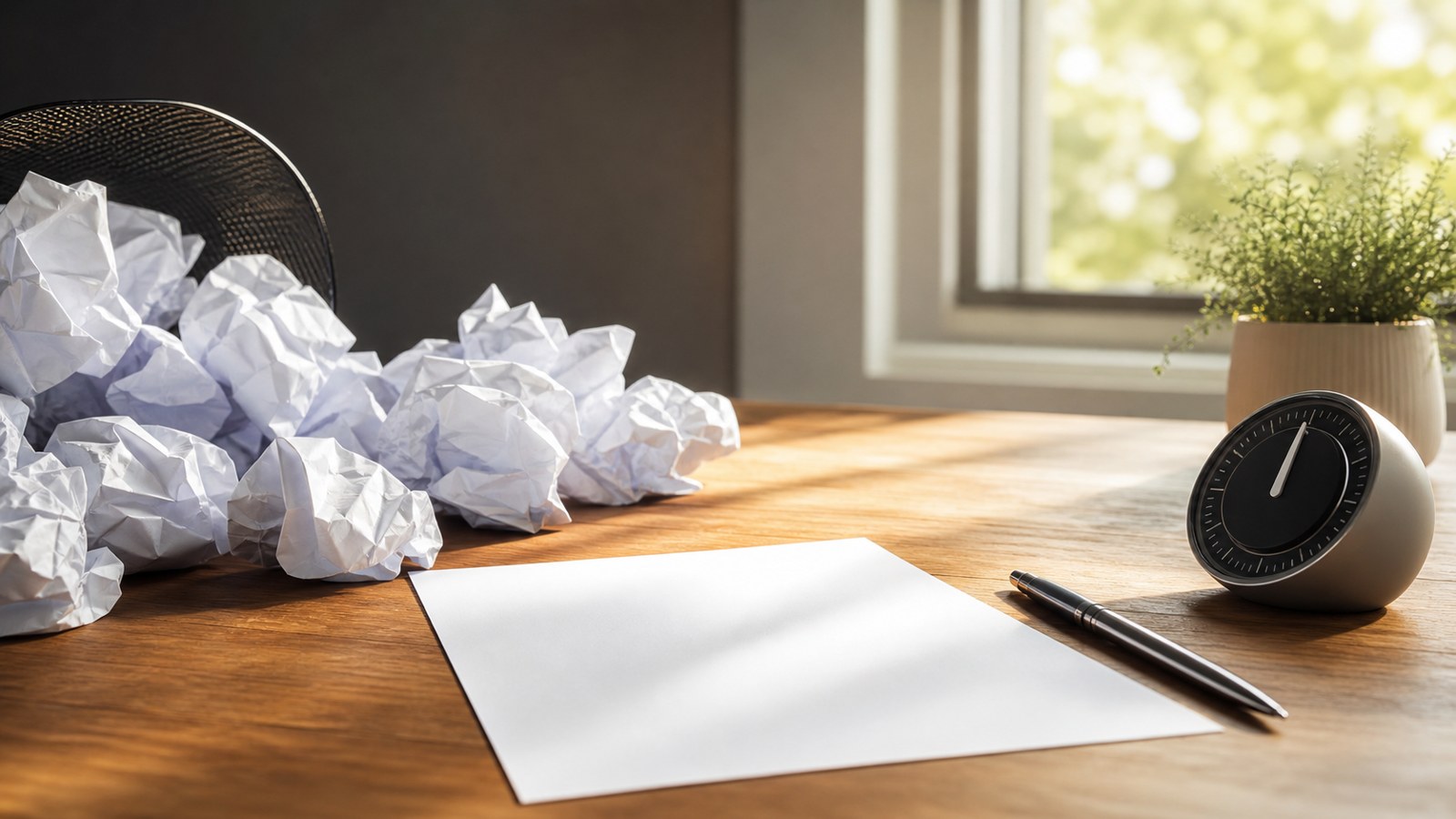
An idea grows when attention turns into a question
A writer can notice something interesting and still have no piece to write. The half-erased label on a greenhouse key, a changed routine at a café, or an unexplained detail in a historical document is material rather than a finished premise. What makes it useful is the question you develop around it and the form you choose for answering that question. Writers draw on observation, reading, research, memory, conversation, and invention in different combinations. There is no single source that reliably supplies the best ideas to everyone. This guide shows how to move from those sources toward something you can draft, using ordinary examples rather than requiring an extraordinary life. You will keep details, examine possible relationships, and test the scale of the resulting piece. The aim is an idea with room for meaningful development, not merely an impressive one-line pitch. Its value will become clearer through the work you make from it.
A: No. Close attention can reveal useful material in ordinary situations.
A: Specific details, questions, and source information when relevant.
A: It supplies context and constraints that can deepen the situation.
A: Yes, if you develop a coherent relationship between them.
A: Original development rather than reproducing distinctive language or scenes.
A: Its significance may emerge beside later material.
A: Focus on a specific encounter, question, or decision.
A: Test its character, context, and potential for meaningful development.
A: No. Select according to interest, purpose, and practical scope.
A: Through the writing and revision that develop them.
Notice a change inside an ordinary routine
A familiar routine gives you a baseline against which a small change becomes visible. Suppose a café usually puts spare chairs beside its entrance, then begins keeping that space empty. Notice the change before deciding what it means. The owner may need a delivery route, a visitor may have requested access, or something else may have happened.
Record what you actually observed: the place, the arrangement, and the time. Keep your possible explanations separately so an appealing guess does not become a remembered fact. A precise observation can support several kinds of writing, while a prematurely settled explanation narrows your attention.
Ask which question interests you enough to pursue. A factual essay might investigate how the café uses shared space; a fictional scene might give someone a reason to want the chairs returned. The source detail does not determine the form. Your inquiry and the responsibilities of that form shape what happens next.
Use objects to discover a relationship
An object becomes promising when its use, history, or ownership raises a question. Imagine a greenhouse key whose tag names a person who no longer works there. Why has the tag remained? Perhaps nobody noticed, perhaps the name carries affection, or perhaps removing it would settle a disagreement about who belongs to the place. These possibilities arise from a relationship, not from declaring the key mysterious.
Describe the object accurately enough to keep the idea tangible. Note the rubbed lettering, the cord, and the hook where it hangs, but avoid making every feature a symbol before the situation exists. For nonfiction, investigate the actual explanation with appropriate access. For fiction, invent people and circumstances that give the retained tag a consequence. The same starting detail can become a memory piece, a scene about ownership, or a short account of a workplace tradition.
Let a place's practical work suggest a piece
Look beyond a place’s most photogenic view and consider what allows it to function. A public garden depends on watering, deliveries, repairs, schedules, and decisions about what to remove. Each process can expose a relationship between people, resources, and the setting. An essay might follow how one planting bed changes over a season; a story might begin when two workers disagree about saving an ailing tree. You do not need to acquire an expert identity before becoming curious, but you do need to learn enough to avoid inventing a process as fact. Ask what the people doing the work would consider an ordinary constraint. A concrete constraint gives writing something to respond to: a limited supply, a narrow working window, or a task that needs several participants. Place then becomes an active situation rather than a decorative background waiting for a plot to arrive.
Read for the question a passage leaves open
Reading can supply more than a subject you would like to imitate. A historical account may mention a journey without explaining how its supplies were arranged. A personal essay may make you reconsider an ordinary word. Mark the question you found, along with the source, rather than copying a striking paragraph into an unlabelled collection.
Pursue that question through other material. The original author’s distinctive language and scene remain theirs; your piece needs its own inquiry and development. If you quote, retain the wording accurately and handle attribution and permission as appropriate to the use. Keeping source material distinguishable from your own notes protects both the research and your drafting choices.
A useful reading record can be brief: the source, the detail, the question, and why it matters to you. You may never use the note. Its purpose is to preserve a route back to the material without making you reconstruct where the idea came from. Reading becomes generative when you follow an uncertainty, tension, or connection through your own work.
Research the constraint that changes your first idea
Research is especially useful when it challenges an easy premise. You might imagine a greenhouse being closed whenever its manager is absent, then learn that several volunteers share responsibility. That fact changes who can act and what a lost key would mean. A fictional situation often becomes more convincing when its practical details resist the writer’s first convenient explanation.
Choose a bounded research question and an appropriate source. Find how access is arranged, what a particular task involves, or what a dated record actually states. Retain dates and distinguish a firsthand account from a later summary. You need not collect every fact before drafting, but mark uncertainties that could change the piece. The strongest research-derived idea is not necessarily the most unusual fact; it may be a constraint that gives people a meaningful decision.
Treat conversation as a relationship with a person
A conversation can reveal unfamiliar work, a different interpretation of an event, or a question you had never considered. Listen without treating the speaker as a dispenser of story material. If you want to use their account in a factual piece, explain the project and clarify what may be quoted or shared. Keep agreed boundaries visible in your records. For fiction, changing a name does not automatically make a distinctive private incident yours to reproduce. You can instead explore a broader concern through substantially invented circumstances. If a gardener talks about finding time to care for a shared plot, you might investigate responsibility in a different setting rather than transplanting the person’s private conflict. The conversation can open your attention while the developed work remains your responsibility. A source’s trust is part of the encounter, not an inconvenience to remove once the idea looks promising.
Give memory a form that respects uncertainty
Memory can start with a sensory detail whose significance becomes apparent later: the sound of a drawer, the weight of a bowl, or a repeated phrase at the end of a visit. Write the remembered detail before deciding what larger meaning it proves. You may discover that the piece concerns a changing routine rather than the whole relationship associated with it.
In nonfiction, distinguish recollection from what you can establish through records or other accounts. Do not invent exact dialogue and present it as a transcript merely because it makes a smoother scene. In fiction, memory can contribute an emotional question while the people and events develop independently. Choose the form consciously. An essay about uncertainty can acknowledge what you no longer know; a story can explore what might happen without claiming that it did.
Combine details through a common concern
Two unrelated notes can become an idea when they share a meaningful pressure. The greenhouse key and an empty café entrance might both concern who controls access to a shared place. That connection is more useful than putting the key in the café simply because the objects happened to appear on adjacent pages of your notebook.
Invent a situation in which the common concern affects someone. A person may need access for a task while another has a reason to restrict it. Establish the people, their information, and the practical consequence of the decision. The combination should create a coherent encounter rather than a collage of attractive details.
Test whether both sources are necessary. If one contributes nothing except novelty, leave it in the notebook for another piece. You are allowed to abandon a clever combination when the draft becomes clearer without it. Originality develops through the choices and relationships you build, not through the number of unusual objects squeezed into a premise.
Choose a scale the idea can sustain
A broad interest such as belonging or environmental change is not yet a manageable assignment. Narrow it to a person, encounter, question, or process you can actually explore. The key tag may sustain a short reflective essay about a workplace’s memory; it may not yet support a novel. Conversely, an access dispute involving several responsibilities could open a longer fictional sequence. Ask what changes and what additional questions follow from that change. Do not enlarge the project only because a longer form sounds more important. Start with a passage whose job you can describe and see what the material makes possible. A compact piece can give a small observation its proper weight, while an unnecessarily large plan can hide the detail that interested you in the first place. Scope is a creative decision as well as a practical one.
Test the idea by making a small piece of it
Write the paragraph, scene, or short sequence that contains the idea’s main pressure. In a nonfiction inquiry, state the question and describe the observed detail. In a story, bring the characters to the decision rather than spending the whole trial explaining the imagined world. The draft will expose what a polished premise can conceal.
Afterward, ask what kept your attention and what information you needed. Did the character’s choice create a consequence? Did the observation lead to a question worth pursuing? An idea that stalls may need more context or a different form rather than abandonment. Keep the trial beside the original note so you can compare your expectation with the material the writing actually produced. That comparison is a better basis for selection than how impressive the premise sounds in conversation.
Keep a notebook you can return to
Organize collected material simply enough that you will use it. Preserve the date and source where relevant, then distinguish observations, questions, quotations, and invented possibilities. A searchable document or a paper notebook can both work. The system matters less than being able to recover the detail and understand its status.
Revisit unused material occasionally without requiring every entry to become a piece. A question that seemed minor may connect with later reading, while an exciting premise may lose its appeal. Choose according to the writing you want to do now and the context you can responsibly develop. Keeping an idea is not a promise to publish it.
The best idea for your next piece is one you can engage with through attention and work. Observation supplies particulars, inquiry supplies direction, and drafting reveals possibilities. Continue following that relationship as the piece changes. A strong result comes from the developed writing, rather than from identifying a supposedly perfect source of inspiration.