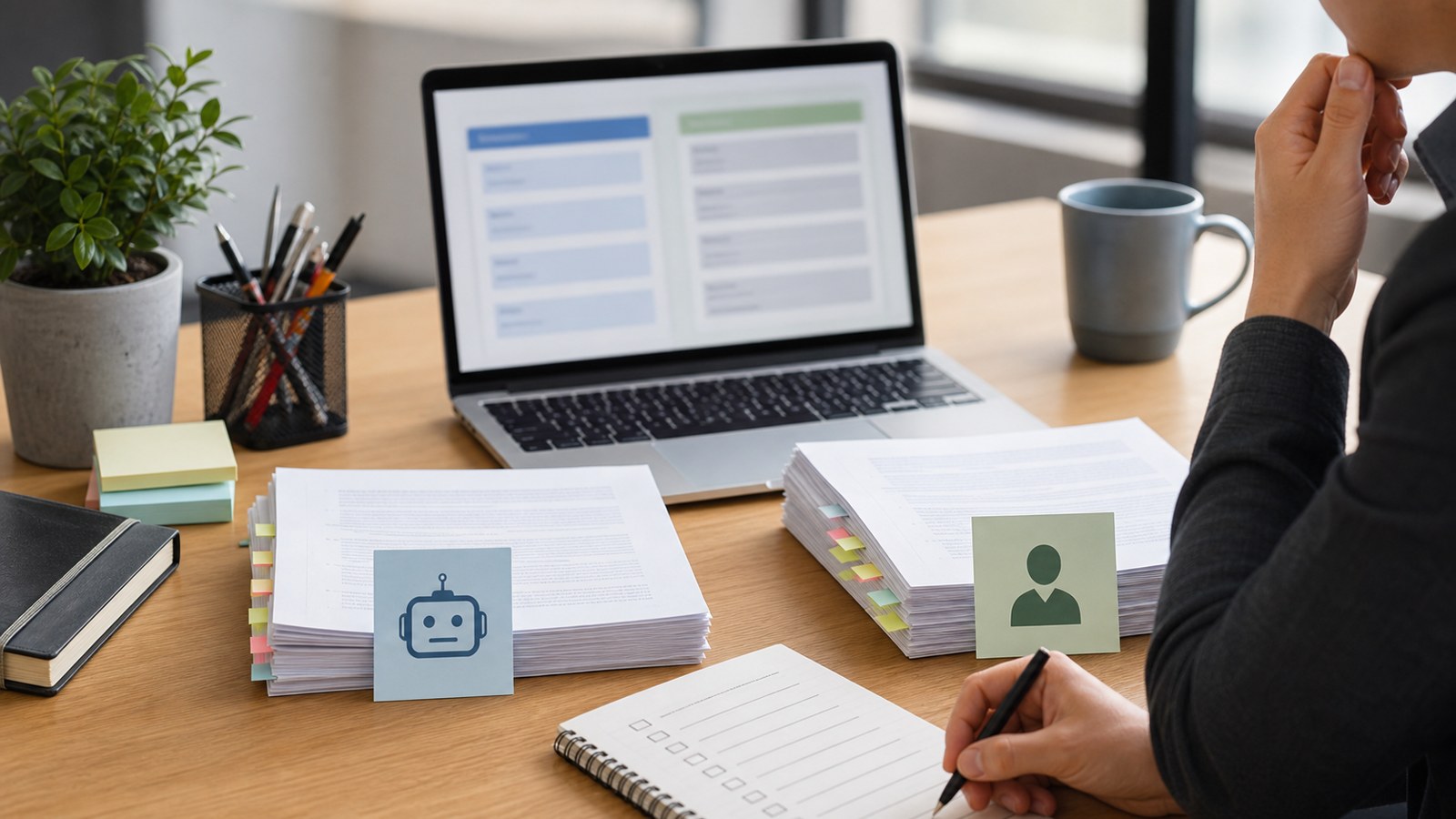
Human Translation and AI Translation Solve Different Problems
AI translation has changed how quickly people can move between languages, but it has not removed the need for human translation. The two approaches answer different needs. AI translation is excellent for speed, access, volume, and first-pass comprehension. Human translation is built for judgment, nuance, accountability, and reader trust. A complete comparison should not treat one as modern and the other as outdated. It should ask what the text is for, who will read it, what could go wrong, and how much human responsibility the final version requires. The most useful approach is to think in levels of responsibility. Some translation tasks only need access: a reader wants the general idea quickly. Some need usability: a team wants a clear draft that can support internal work. Others need trust: customers, students, patients, partners, or public readers will rely on the final wording. AI can support several of these levels, but human judgment becomes more important as the text moves closer to real-world consequence. That is the comparison this guide keeps in focus. A complete comparison should therefore look beyond output speed. It should examine who controls terminology, who notices missing context, who protects confidentiality, who adapts tone, and who answers when the final text is questioned. Those responsibilities define the practical difference between assistance and accountability. The comparison also changes as projects grow. A single casual sentence, a thousand product descriptions, a legal policy, and a global advertising campaign all create different translation pressures. AI may reduce friction in one case, while human expertise may define success in another. The useful question is not whether AI is impressive or whether humans are careful. It is what kind of care the text needs before it reaches its reader. That is why the best translation strategies are layered. They do not reject AI out of fear or accept it without review. They decide where speed helps, where human judgment protects meaning, and where a documented process is necessary for confidence. In other words, the question is not only who or what produced the sentence. The question is who checked it, who shaped it for the reader, and who is responsible for the result. That responsibility may be light for informal reading and heavy for published work. Matching the level of responsibility to the text is the heart of a good translation plan. The same document may need different levels of care at different stages. A good plan names those stages clearly so draft, review, and final publication are never mistaken for one another.
A: AI translation is a modern form of machine translation, usually using advanced language models or neural systems.
A: No. For quick low-risk understanding, AI may be the better practical choice.
A: The raw output is cheaper, but review and risk can change the true cost.
A: Sometimes, but idioms still need checking because context changes meaning.
A: When the text is creative, sensitive, specialized, or the AI draft is misleading.
A: A human review process that corrects and improves AI-translated text.
A: It can imitate patterns, but human review is safer for important brand communication.
A: Quality may vary widely, so human expertise becomes more important.
A: Only in approved secure systems with clear data rules.
A: Use AI for speed where risk is low and humans for judgment where trust matters.
How AI Translation Works in Practice
AI translation systems predict likely target-language wording based on patterns learned from enormous amounts of multilingual data. The result can be impressively fluent, especially for common subjects and widely supported language pairs. That fluency is useful, but it can also make errors harder to notice.
AI does not truly understand a business goal, legal risk, emotional subtext, or cultural relationship in the human sense. It can model language patterns, but it cannot take responsibility for the consequences of a choice. That distinction matters whenever a translation will be trusted by real readers.
AI translation can feel conversational and confident, which makes it especially important to verify. Older machine output often sounded awkward enough to invite suspicion. Newer AI output may sound natural even when it has quietly misunderstood a relationship, term, or implication.
AI translation is most impressive when the reader cannot see the source. The target sentence may sound polished enough to pass a quick read. Bilingual review is the moment when hidden problems appear, because the reviewer can compare what the AI said with what the source actually meant.
This is why AI output should be treated as a draft with unknown reliability. It may be excellent, mediocre, or wrong in ways that are not obvious. The workflow should decide how much checking is required before anyone depends on it.
Human translators also understand when consistency should bend. A glossary term may stay fixed, while surrounding phrasing changes for rhythm or emphasis. AI may over-repeat or vary too freely unless a human sets the boundary between term control and readable style.
What Human Translators Add
Human translators add interpretation. They can recognize when the source is joking, hedging, persuading, warning, flattering, apologizing, or implying something indirectly. They can research terms, ask clarifying questions, follow a style guide, and adapt the message for a specific audience.
They also bring ethical and professional judgment. A human translator can say that a source sentence is ambiguous, that a requested wording is misleading, or that a cultural adaptation needs approval. AI output may offer a sentence; a human translator can offer a reasoned decision.
Human translators also understand audience pressure. They know that a sentence for beginners should not sound like a specialist manual, that a public apology should not sound defensive, and that a luxury brand may need restraint rather than excitement.
This audience awareness is difficult to reduce to a single prompt or setting. It comes from reading the whole situation: the source, the reader, the channel, the stakes, and the desired response.
Quality Depends on the Type of Text
For simple, repetitive, low-risk text, AI translation may produce a useful result with minimal editing. For creative, technical, legal, medical, educational, or emotionally sensitive material, the gap between fluent output and reliable translation becomes more important.
Human translation tends to shine when there are tradeoffs. Should a slogan be recreated or translated literally? Should an honorific be preserved, softened, or explained? Should a technical term match industry usage or a client's existing glossary? These decisions require context beyond pattern matching.
Text type changes the comparison dramatically. AI may handle a simple help article well, yet struggle with poetry, humor, legal nuance, or a campaign headline. Human translators can decide when the goal is information, emotion, persuasion, precision, or style.
A human can also protect the writer's relationship with the reader. Customer support, education, healthcare, and community communication often depend on warmth and respect. A technically correct sentence that sounds impatient or distant can still fail.
For creative texts, quality often depends on recreating impact. A headline may need punch, a story may need voice, and a joke may need timing. AI can suggest options, but a human translator judges whether the reader response matches the source purpose.
For technical texts, quality depends on controlled precision. The translator must know when a common word has a specialized meaning and when a standard term already exists. AI may produce a plausible general phrase that specialists would not use.
Cost and Speed Are Real Advantages for AI
AI translation is popular for a reason. It is fast, inexpensive, and available at the moment of need. It can help teams scan foreign-language documents, support multilingual browsing, triage customer feedback, or draft internal material before a human review.
Human translation costs more because it includes time, expertise, research, revision, and accountability. The cost is justified when the final text must persuade, instruct, protect, represent a brand, or stand up to scrutiny. The question is not whether human work costs more; it is whether the text deserves that level of care.
Speed is still a meaningful advantage. AI can help people access information they would otherwise ignore because of language barriers. That access matters, especially for informal learning and early discovery. The key is not to confuse access with final authority.
Human time should be spent where it changes the outcome. A skilled translator should not have to manually draft every low-risk internal note if AI can provide safe comprehension. But a skilled translator should be involved when the final words carry trust.
Post-Editing Creates a Middle Path
Many organizations now combine AI translation with human post-editing. AI provides a draft, and a human editor checks meaning, terminology, tone, completeness, and naturalness. This can save time when the subject is suitable and the source is clear.
However, post-editing requires skill. The editor must resist the pull of a fluent but wrong sentence. They must compare against the source, not merely make the AI output sound smoother. In some cases, starting fresh is faster than repairing a misleading draft.
Post-editing should begin with a decision about quality level. Some projects need understandable text; others need polished publication. The editor's time, fee, and method should match that level from the start.
A strong post-editor reads suspiciously. They check whether the AI invented connections, removed uncertainty, normalized a distinctive voice, or chose a term that sounds right but belongs to the wrong field.
AI speed can improve multilingual access inside organizations. Teams can scan more material, identify urgent items, and communicate across language barriers faster than before. That benefit is real, as long as the organization knows which outputs are drafts.
Accountability Separates the Workflows
When a translation affects safety, rights, money, reputation, health, or public understanding, accountability matters. A human translator or translation team can document choices, follow standards, and respond to questions. AI systems do not provide professional responsibility in the same way.
That does not mean AI has no place in serious workflows. It means AI should be governed. Confidentiality, review, domain expertise, and approval steps should be clear before sensitive content is processed.
Accountability also includes documentation. For important content, someone should know which glossary was used, who approved sensitive choices, and what uncertainties were resolved. This record is hard to replace with raw AI output.
Human review should be reserved for the places where it changes trust. Not every internal note needs literary polish. But anything published, contractual, instructional, sensitive, or brand-defining deserves a level of care that raw AI cannot guarantee.
Choosing the Right Level of Human Involvement
Use AI alone for low-risk comprehension, quick personal understanding, and early exploration. Use AI plus human post-editing when volume is high and quality matters. Use human translation from the start when voice, nuance, expertise, confidentiality, or consequences are central.
The strongest teams do not ask AI to replace judgment. They use AI to reduce friction where appropriate and reserve human attention for the choices that shape trust.
The right level of human involvement may change inside one project. A company might use AI to scan all incoming comments, human post-editing for common help pages, and expert human translation for legal notices or campaign language.
That layered approach treats translation as risk management as well as language work. It gives speed where speed is useful and judgment where judgment protects the reader.
Post-editing quality depends on comparing against the source. A monolingual editor can make AI output smoother, but cannot reliably restore missing meaning. Serious translation review requires bilingual attention and, when needed, subject expertise.
Accountable workflows also make revision easier later. If a term changes, a reviewer can update the glossary and apply the decision consistently. If a reader questions a phrase, the team can explain the source-based reasoning rather than shrugging at an automated suggestion.