A Daily Word Game Works Best as a Comfortable Practice Habit
A small word puzzle can give an ordinary day a pleasant point of focus: one clue to interpret, one letter pattern to test, or one unfamiliar word to explore. That is a useful way to understand the promise of keeping your brain sharp here. The activity asks you to engage with language, but a game score is not a measure of general cognitive health, and enjoying a daily puzzle does not establish a medical benefit. This article builds a practical routine around manageable play, varied tasks, and thoughtful review. The schedule is an example to adapt, not a required prescription. Choose a comfortable challenge, give it a clear place in the day, and leave room for the rest of your interests.
A: It means engaging with manageable language tasks, without claiming a general medical effect.
A: There is no prescribed duration; choose a comfortable boundary for the time available.
A: You can return at the next convenient moment without treating the gap as failure.
A: A supplied-list word search can provide that different kind of activity.
A: Review one understood clue or corrected mistake, then leave a clear resume point.
A: It demonstrates a valid one-letter-change route, not a shortest-route proof.
A: A useful solving observation or a simple record that the session was enjoyable.
A: Agree on the session's purpose and any modified rules before beginning.
A: It supports a claim about that game performance rather than a broad health conclusion.
A: Reduce it when the saved list becomes too large to revisit comfortably.
Begin With Enjoyment and a Specific Task
Choose a word activity you are willing to return to because the task itself interests you. You might enjoy interpreting clues, finding letter paths, or making words from a restricted set. Those activities offer different kinds of language practice. A routine does not need to be impressive to be useful as a hobby. Start with a manageable puzzle and a clear purpose for the session. That gives you something concrete to do without attaching an ambitious claim to every completed grid.
Decide what the day’s task asks of you. A crossword can involve linking clues with meanings, while an anagram asks you to inspect a fixed letter inventory. A supplied-list word search relies on locating terms rather than recalling them from definitions. These differences can guide your choices without ranking one activity as universally superior. If you know the task, you can judge whether the session fits your current mood and available attention.
Keep the routine flexible enough to survive an ordinary busy week. Missing a day need not turn the hobby into a failed project. You can return at the next convenient moment or choose a shorter activity. A satisfying habit should not require an apology to a streak counter. The practical question is whether you want to continue and whether the chosen level leaves room for curiosity. That is a more comfortable foundation than treating every session as a test of worth.
Keep Broader Cognitive Claims Separate From Game Practice
The National Institute on Aging cautions against assuming that commercially offered brain-training applications have the cognitive effects observed in clinical trials. That matters when a puzzle is advertised through broad promises. Completing a game demonstrates performance on that activity, not proof of a general health outcome. The routine below is offered as enjoyable language practice. It does not claim to prevent disease, diagnose ability, or replace other parts of daily life.
Give the Habit a Small and Recognizable Place
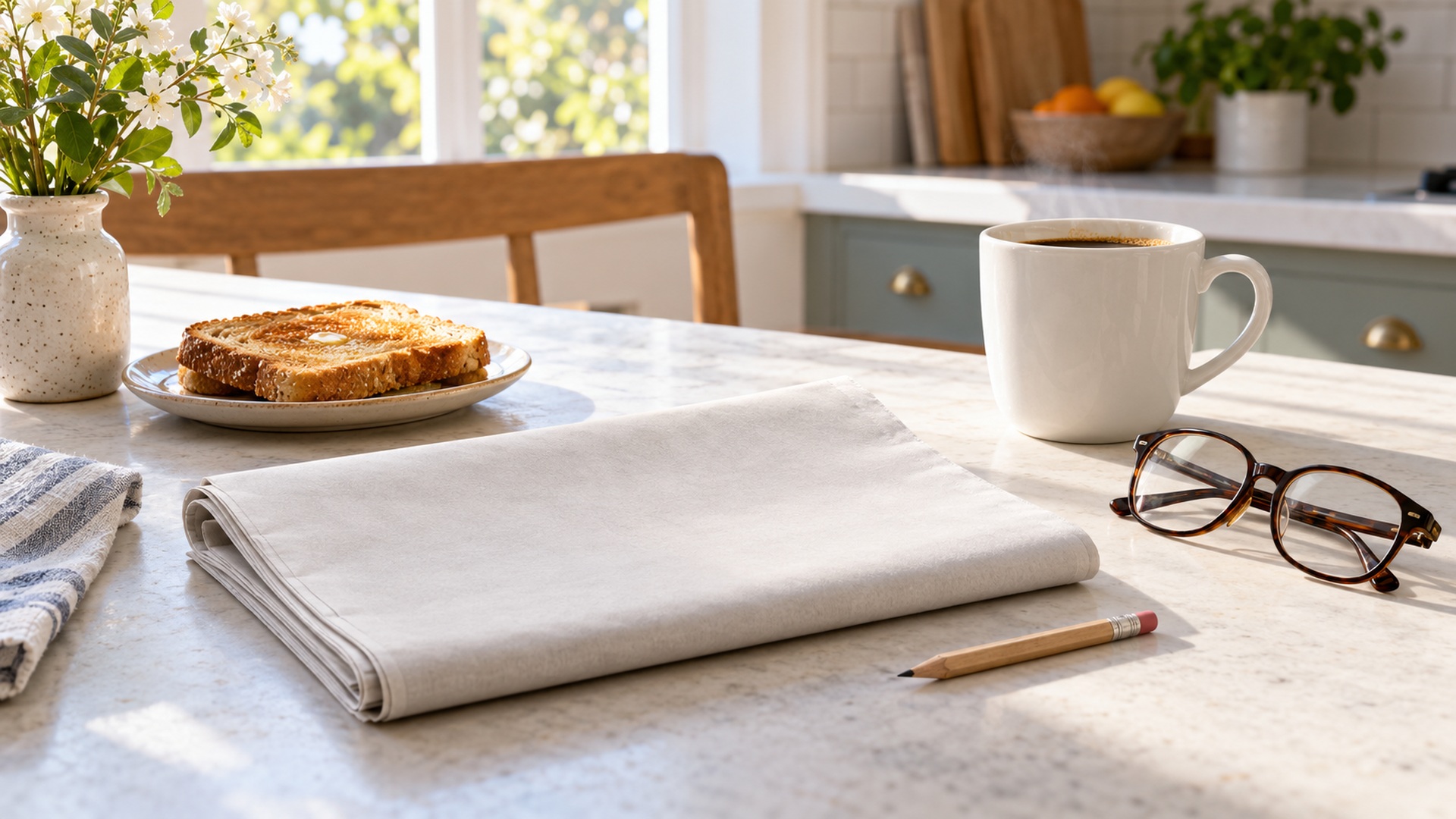
Link the puzzle with a moment you already recognize, such as a quiet break after breakfast or a few minutes before a leisurely evening activity. The cue should be convenient rather than depend on an ideal day. Keep the needed materials nearby, whether a pencil and booklet or a familiar digital page. Reducing the effort required to begin makes the routine easier to choose. You do not need a dedicated study room for a small language hobby.
Set a comfortable stopping point before you start. It might be one puzzle, one section, or a brief amount of time you have available. The exact limit is a personal choice rather than a research-backed dosage. Knowing the boundary helps prevent a pleasant break from extending into an obligation. If an answer remains unfinished, leave a resume note or return another day. The task can stay interesting without being completed at all costs.
Use a Short Crossword Session for Meaning-Based Reasoning
An approachable crossword gives you a compact combination of clue interpretation and crossing-letter checks. Start with a clue you recognize, then use its letters to examine another entry. Keep a plausible guess separate from a confirmed answer. At the end, choose one clue you misunderstood and explain why its answer fits. That small review makes the session more informative than simply recording a completion time. It also gives an unfinished solve a useful outcome.
For an original miniature example, not late in five cells can suggest EARLY. A crossing may support that candidate, while a conflicting letter tells you to reconsider the answer supplying it. The example is deliberately simple because the routine begins with understanding the interaction between clue and grid. You can make the challenge more demanding when that process becomes comfortable. Difficulty should serve the activity you want, not exist merely to make the daily session look serious.
Choose explained solutions when you want to learn from the clue style. A revealed answer without an explanation may leave the key connection obscure. Read the wording again and ask whether the issue was a sense, grammatical form, name, or convention. Record one observation if it seems useful for later puzzles. There is no need to turn every missed clue into a long homework list. A short review can remain part of the enjoyable break.
Use Letter-Building Games for a Different Kind of Search
A restricted-letter game asks you to produce words within its specific rules. The New York Times’ Spelling Bee help describes constructing words from preselected letters. Read the current entry conditions before playing. During a short session, you can explore a few possible forms rather than chase every available answer. The activity has a clear constraint, but that constraint is not the same as a complete account of English vocabulary.
If a word is rejected, inspect the game’s rules rather than immediately assuming you spelled a nonexistent word. The reason may concern a required letter, length, or a curated answer policy. After play, select an unfamiliar accepted or missed word for a dictionary check. This separates the game’s validation from your understanding of the word. The useful follow-up asks what the term means and where it belongs, not only whether it adds points.
Try an Anagram When You Want a Compact Letter Task
An anagram session can be very small: choose a fixed set of letters and look for a rearrangement that uses them exactly. For a demonstration, SILENT can become LISTEN, with the same six letters in a different order. Check the inventory rather than relying on visual resemblance. Then consider how the meanings relate if you want to make a sentence around the pair. The letter check and the creative interpretation are different stages of the activity.
A Word Ladder Offers a Clear Rule for Each Move
A one-letter ladder can provide another compact task. In an original example, MATE changes to MATH, then BATH, then BATS, then BITS. Every neighboring pair changes one position and keeps four letters. The words need not all belong to one topic. The task is to make valid steps under the rule. Read each word and confirm its meaning when unfamiliar, so the exercise does not become merely a sequence of shapes that happen to resemble words.
You can try to find a shorter route or choose different endpoints, but say which goal you are using. A casual ladder can be enjoyable without proving that it is the shortest possible solution. If you claim an optimum, that requires a stronger search than simply noticing a valid path. Keeping the claim modest makes the activity easier to share. You have demonstrated one workable route, which is already enough for a small daily challenge.
When making a ladder for another person, check the intermediate words before offering it. Agree on the reference or accepted vocabulary if there could be a dispute. Avoid adding a rare form only because it bridges a difficult step, unless exploring that form is part of the intended activity. A clear fair rule matters more than manufacturing an impressive-looking chain. The shared task should leave both people understanding why each move is allowed.
A Word Search Can Be a Relaxed Visual Session
A supplied-list word search can suit a day when you prefer locating spellings to generating answers. Choose one target, follow a systematic sweep, and confirm the full route before marking it. The challenge is different from a clue-based puzzle, so there is no need to compare their scores as if they measured the same thing. Follow the particular grid’s direction rules. A comfortable session can involve a few found words rather than a demand to finish the whole page.
Rotate Tasks Without Turning Variety Into a Quota
An example week might include a crossword on one day, a letter-building game on another, and a small ladder when time is short. Leave days for repeating a favorite or doing something else. The rotation gives you different kinds of language tasks, but it need not be perfectly balanced. Notice which activities you enjoy and which ones create unnecessary friction. Adjust the mix through that experience rather than forcing every format into an equal share of the calendar.
If you prefer a single game, keep it and vary the way you review it. One session might focus on a missed meaning, another on a spelling pattern, and another simply on enjoyment. Variety is an option for maintaining interest, not an automatic sign that a routine is better. The daily habit should reflect your purpose. A familiar format can still produce different observations when you pay attention to the actual words and decisions involved.
Make the Review Short Enough to Revisit
Choose one or two discoveries at the end of play. A discovery might be a word, an unfamiliar sense, or a solving mistake you corrected. Write a brief explanation in ordinary language and check it against a reliable source when needed. Avoid recording only a score or a string of unexplained answers if your goal includes learning. The record should preserve what was interesting. It does not have to document every action taken during the session.
Return to selected entries later and see whether you can explain them before reading your earlier account. Then correct or refine the explanation. This is a way to inspect your current understanding, not a guarantee that every item will become permanent knowledge. Keep the shortlist manageable. If the review feels heavier than the game, reduce the number of saved items or reconsider what is worth keeping. The routine should remain small enough to fit its role.
Separate enjoyment records from learning records when that helps. A note that a puzzle was pleasant is worthwhile even if it introduced no new word. A record of a missed clue can be worthwhile even if the score was unremarkable. There is no need to make every session accomplish every possible goal. Knowing which observation you are preserving makes the record more honest and more useful when you look back.
Social Play Works Best With Shared Expectations
A friend or family member can make a word game more enjoyable, especially when both people agree on the kind of session they want. A cooperative solve invites explanation, while a competitive round may emphasize speed or scores. Neither arrangement is inherently right for every occasion. State any modified rules and give each person room to contribute. A shared language activity should not become a public test of who knows more obscure words.
Judge the Routine Through Comfort, Interest, and Specific Progress
Look for observations you can actually support. Perhaps you now recognize a clue convention, explain a word more clearly, or stop repeating the same unsuccessful search route. These are specific changes within the activity. A faster score may also be satisfying, but it should not stand in for a broad conclusion about your mind or health. Keep the achievement at the scale of the evidence. That lets you enjoy progress without making the routine responsible for promises it cannot establish.
A sustainable daily word-game habit leaves you willing to return. Choose a manageable task, begin from a convenient cue, stop at a comfortable boundary, and review a small discovery when useful. Adjust the pattern when life or interests change. The activity can be a pleasant part of an ordinary day rather than a mandatory program. Its value includes curiosity, play, and a clear moment of engagement with language. Those are worthwhile reasons to open another puzzle tomorrow.
Before choosing the next puzzle, ask what kind of session would be welcome today. You may want a familiar format, a fresh small challenge, or a shared activity with someone else. That choice keeps the routine connected with actual interest. A flexible habit can remain recognizable while making room for those differences from one day to the next.